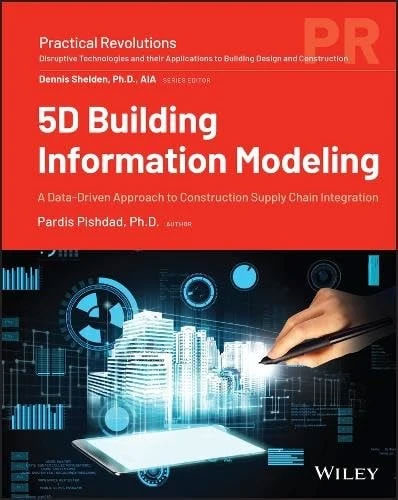
Professor Pardis Pishdad published a new book on 5D BIM that shows why the future of building belongs to people who can connect and orchestrate ideas, data and teams
By Melissa Alonso | October 2026
Ask someone to picture a construction career and the image is usually a job site: hard hats, heavy equipment, materials stacked high. That picture is real, but it is only part of the story. Behind every building is a web of decisions, drawings, schedules and payments, and the people who manage that web are shaping the industry's future.
Pardis Pishdad, professor in the School of Building Construction at Georgia Tech's College of Design, has spent her career studying how to make that web work better. Her new book, 5D Building Information Modeling: A Data-Driven Approach to Construction Supply Chain Integration (Wiley, 2026), argues that the industry's biggest opportunity is connection.
Build it digitally first
The technology at the center of the book is Building Information Modeling, or BIM. Pishdad explains it to young students this way: imagine designing a building and building it digitally before anything is built in the real world.
"You create the 3D model, the 3D geometry model of the building exactly as it's going to be built in the real world, and you get to interact with it in a digital environment," she says. Click on an element and you can see what it is made of and how that material behaves. You can also test how the building will perform, from lighting and temperature to structure.
Each added layer of information is another "dimension." A 3D model shows geometry. 4D adds time and scheduling. 5D adds cost. "It's not just a visualization tool," Pishdad says. "It's a tool that helps you understand how the building performs in the real world."
Pishdad's book treats 5D BIM as more than a way to attach prices to a model. She uses it to connect design, estimating, procurement, cost control and, ultimately, payment, so that information does not stay locked in separate silos. She frames construction as three flows: information, products and money.
When those flows are integrated, everyone involved in designing and building a project can see what is happening and make decisions earlier. Her central idea fits in one sentence: "Integration creates visibility, and visibility enables better decisions." The payoff, she says, includes improved communication, cost control, time performance and quality, along with less waste.
An orchestra, not a solo
Pishdad's interest in integration grew out of her own path through architecture, engineering, project management and construction. Each field, she noticed, looks at the same building through a different lens. "A building is ultimately the product of all these disciplines working together, much like an orchestra, where the quality and outcome totally depends on the harmony among the players."
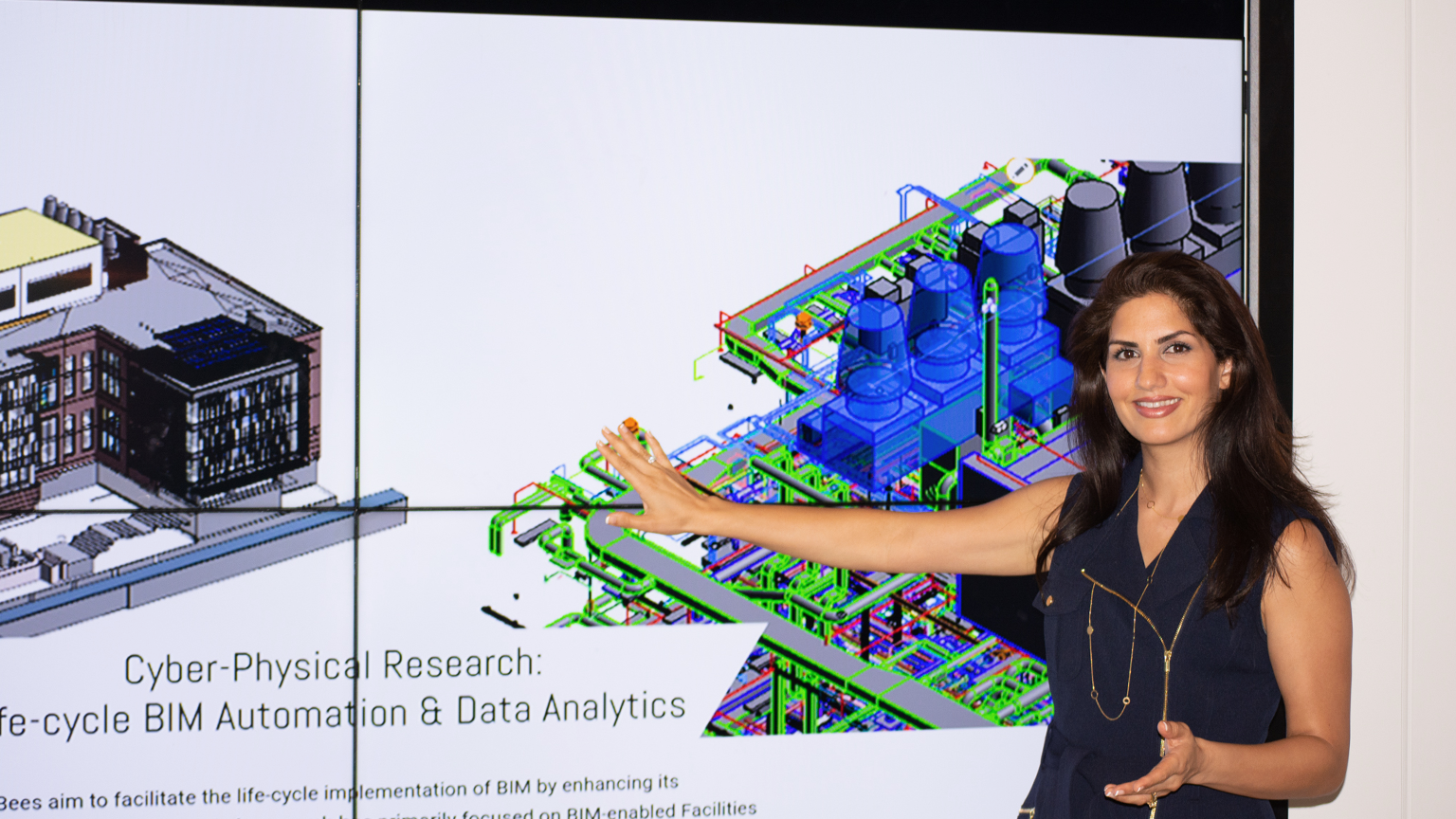
Industry reports, she adds, repeatedly point to fragmentation as a source of waste and inefficiency. Her doctoral research examined integration through people, organizations and contracts. At Georgia Tech, an institute of technology, she added the technology side, studying BIM data and supply chain integration in her Smart BEES Lab with her PhD students.
The book builds directly on that research and on what she teaches, including the course Integrated Design and Construction Processes. In an earlier course with a 5D BIM workshop and lab, students used the technology to assess the life cycle cost of different design options.
They saw in real time how a design change affected cost, instead of waiting through the slow process traditional methods require. BIM also lets teams check that different building systems do not clash, simulate how a project will be built over time, and weigh design choices against cost, energy efficiency and embodied carbon, the emissions tied to materials and construction.
What a construction career looks like now
For students weighing their options, Pishdad offers a direct comparison. Just as business students learn to manage organizations through communication, finance, leadership and branding, construction students learn to manage buildings.
"I see people who come to the School of Building Construction as people who are interested in management and leadership in the context of buildings," she says. Creativity still sits at the heart of the work. Designers bring a vision, and it takes what she calls a village to realize it: contractors who understand cost and constructability, owners, and facility managers who know how a building will operate.
The earlier those voices come together, the better the design and the more efficient the build. "It's no longer just being on the site and putting bricks on bricks," she says. "It's about managing the entire process and communicating and creating efficiencies."
Asked what she hopes readers remember, Pishdad returns to her thesis: integration creates visibility, visibility enables better decisions, and those decisions create opportunities for better project outcomes.
For young people curious about construction, the message is that the field needs people who can work across disciplines, understand data and lead teams, and that it offers room for creativity and technology alike.
Media Inquiries
Director of
Communications
College of Design
E-mail Ann
Assistant Director of Communications
College of Design
E-mail Melissa