Meet the New Chair

Georg Reichard Brings a Fresh Vision to Building Construction
Georg Reichard in front of Georgia Tech construction site with Atlanta skyline in background.
By Melissa Alonso | Atlanta, GA

When Georg Reichard steps into a new role, it’s rarely the product of a straight line. His career path has been a series of pivots—from structural engineering to building physics, from IT infrastructure to academia—that now converge in his new role as Chair of the School of Building Construction at Georgia Tech.
From Austria to Atlanta by Way of Virginia Tech

Reichard grew up in Austria, where his father ran a structural engineering office. “I wanted to do everything else than that,” he laughed. But a high school conference changed his mind when he heard a keynote speaker explain that “50% of civil engineers work in other fields… problem solvers who take on whatever comes their way.”

His curiosity led him from structural engineering into building performance research, facility management, and eventually construction management. For the past 20 years, he thrived at Virginia Tech, helping to bridge engineering and architecture in a school with a strong industry presence.

Now, he sees Georgia Tech—and Atlanta—as an opportunity to do something even bigger. “We have a unique chance to accelerate growth in an urban setting. The industry needs more undergraduates. We need to punch on that level, and I think we can.”

AI and the Future of Building Construction

For Reichard, one of the most important—and potentially disruptive—forces shaping the next decade of the construction industry is artificial intelligence. His view balances optimism with caution, shaped by both his decades of research and his direct experience with industry adoption cycles.

“The speed of innovation with AI, digitalization, even some robotics, will be a disruptor,” he explained. “It’s happening faster than the traditional 20-year research-to-industry gap we’ve often seen in this field. With AI, that gap could shrink to just three years.”

He points to a historic problem: the construction industry’s resistance to change. “It’s a very risk-averse industry,” he said. “They make a lot of money with the processes they already have, and any change introduces risk—and risk cuts into profits. But AI, especially machine learning, is different. It gives us tools to work with the massive amounts of data we’ve been collecting for years but couldn’t fully use.”

For Reichard, AI’s most immediate impact will be in documentation, process management, and identifying inefficiencies. “It will transform how we write and communicate in construction documents, how we integrate with regulations, and how we streamline workflows across what is now a very fragmented industry,” he said. “My early research focused on interoperability between software tools, and now we’re moving toward interoperability of processes themselves.”

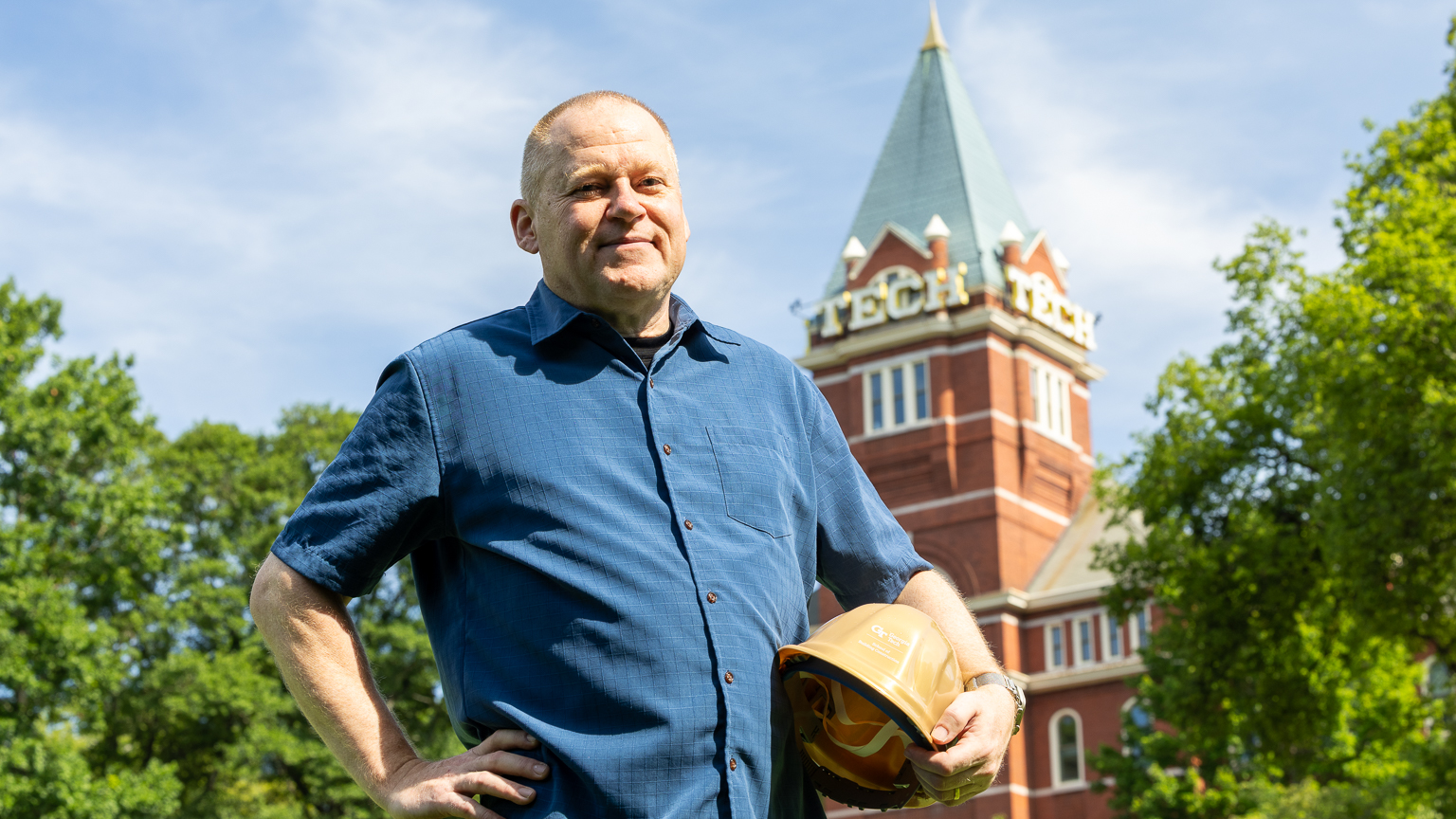
Portrait of Georg Reichard, with Tech Tower in the background over his left shoulder.
Wes McRae, College of Design

Still, he warns that AI alone won’t solve construction’s most persistent challenges. “AI won’t teach you constructability,” he stressed. “You still need the hands-on experience to understand the process on-site, the risks involved, and the realities of building.”

That’s why, in his view, the role of academia is critical. “Our duty is to give students the technical foundation to recognize what’s useful and what’s garbage. If you don’t have that foundation, you can’t filter AI outputs effectively, and that can be dangerous.”

He also sees AI as a potential solution to one of the industry’s overlooked skill gaps: writing. “It’s sometimes frustrating—and scary—how poor writing skills are among young graduates in construction. AI writing tools can help improve clarity and structure, but the messaging still has to come from the person. You need to know the context, the background, and the implications of what you’re delivering.”

And while much of the AI conversation focuses on flashy tech—robotic dogs on job sites, autonomous excavation equipment—Reichard is quick to remind people that the real transformation will be quieter but more profound. “It’s not just about replacing tasks. It’s about integrating technology into how we actually do work, how we share knowledge, and how we manage safety and quality on-site. The systems themselves will become a form of supervision—like the way cars now alert you to take a break or adjust your driving.”

In the end, Reichard sees AI as neither a silver bullet nor a passing fad—it’s a toolset. “The students who will thrive in this future are the ones who embrace the tools, understand the underlying knowledge, and can innovate responsibly. That’s what we’re going to prepare them for here.”

Advice for First-Year Students
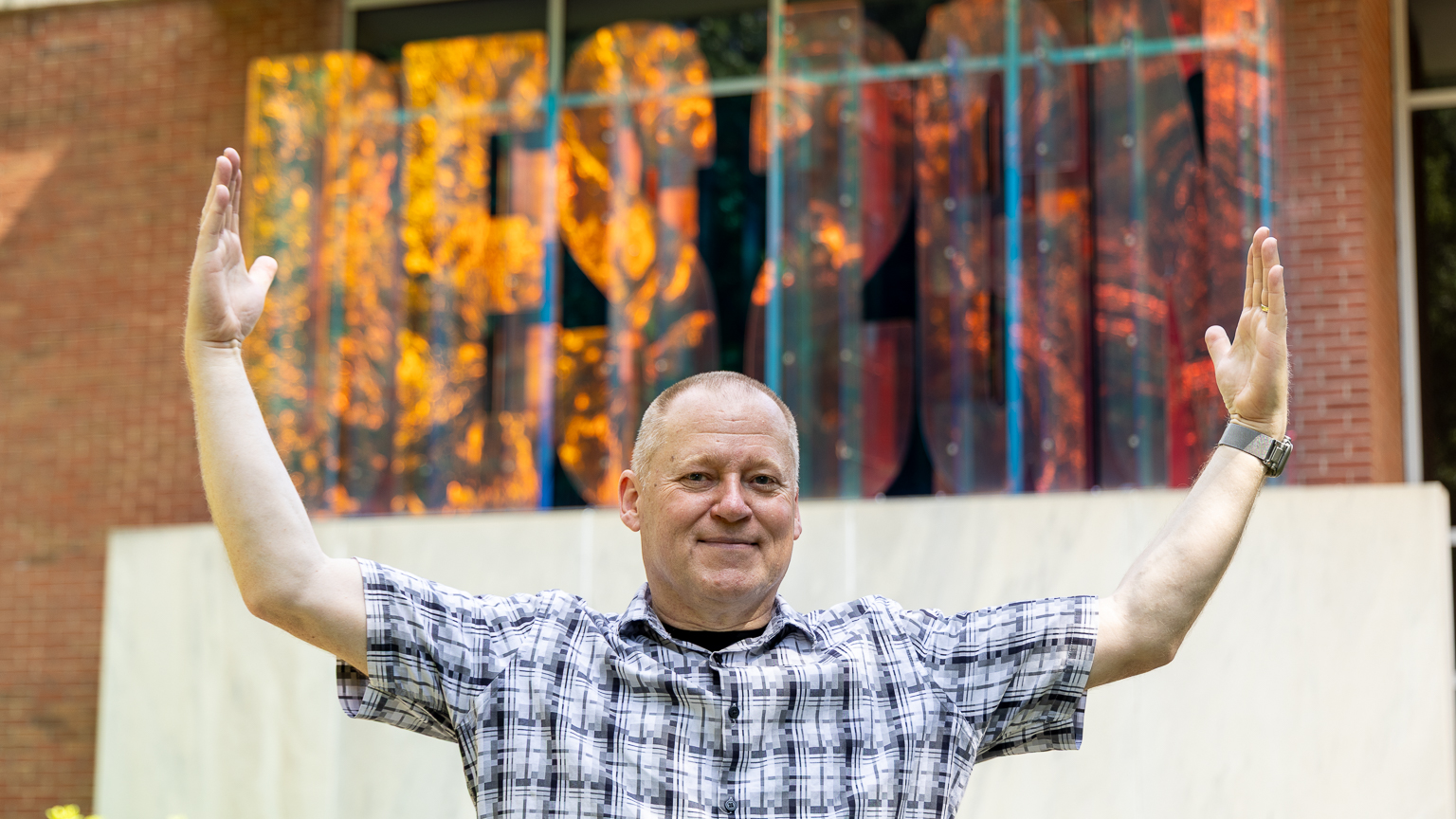
Georg Reichard holding his hands to bracket the DESIGN letters in front of the East Architecture building.

Reichard’s message to incoming students is simple: stay open.

“You’re in a fantastic program at a perfect time. Four years will fly past you. Planning your career is saying yes to opportunities. The school will make an effort to share what’s available, but you need to be ready to listen and act. It’s a great time to be in this industry, and you can be part of something exciting for decades to come.”

Have a Question for Us?

 
If you can't find the information you were looking for, we'll get you to the right place.